Whale and Mermaid Girl 3D Shadow Box: A Practical Guide to Layered Paper Art
The resurgence of handcrafted home decor has brought layered paper art into the spotlight, offering a unique blend of traditional craftsmanship and modern digital precision. Among the most captivating designs in this category is the Whale and Mermaid Girl 3D Shadow Box. This specific template combines whimsical marine imagery with the technical depth of multi-layered papercraft, creating a piece that functions both as a framed wall decoration and, with minor modifications, an illuminated lightbox. For crafters, interior design enthusiasts, and gift-givers, understanding the nuances of this product is essential before committing time and resources to its creation.
Understanding the Design and Structure
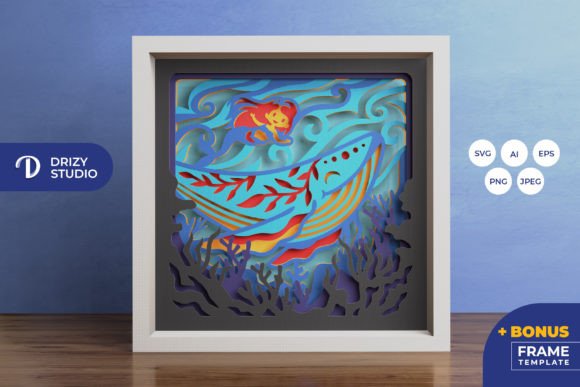
At its core, the Whale and Mermaid Girl 3D Shadow Box is a digital template designed for layered assembly. Unlike flat prints or single-layer cutouts, this design relies on depth. The template consists of seven distinct layers, each contributing to the overall perspective and narrative of the scene. When assembled correctly, these layers create a parallax effect, where foreground elements appear closer and background elements recede, mimicking the visual experience of looking into a deep ocean trench.
The central motif features a mermaid girl interacting with a whale, a classic pairing that evokes themes of friendship, nature, and fantasy. The square format, measuring 20.32 by 20.32 cm (approximately 8 by 8 inches), provides a balanced canvas that fits standard framing options without overwhelming smaller wall spaces. The inclusion of various file formats—AI, EPS, PNG, SVG, and JPEG—ensures compatibility with a wide range of tools, from professional graphic design software to consumer-grade cutting machines like Silhouette and Cricut.
Evaluating File Formats and Compatibility
One of the primary considerations when selecting a digital craft template is file versatility. The Whale and Mermaid Girl 3D Shadow Box package includes several formats, each serving a specific purpose in the creation process.
- SVG Files: These are crucial for users with electronic cutting machines. The scalable vector graphics allow for precise cuts without pixelation, regardless of resizing. However, it is vital to maintain the aspect ratio when adjusting dimensions to prevent distortion of the intricate details.
- AI and EPS Files: Ideal for professional designers using Adobe Illustrator or similar vector-based programs. These formats allow for easy editing of individual elements, such as changing the shape of the whale or adjusting the mermaid’s position, provided the user has advanced design skills.
- PNG and JPEG Files: These raster images serve primarily as visual references or previews. The high-resolution JPEG (3000 x 2000 px) offers a clear guide for manual cutters who prefer to print and trace rather than use a machine.
For those without access to cutting machines, the template remains accessible. The design can be printed on cardstock and cut manually using an art knife or scissors. While this method requires more time and patience, it allows for a tactile connection to the craft that machine cutting sometimes lacks. The key difference lies in precision; machine-cut edges are uniformly clean, whereas hand-cut edges may have slight variations that add a rustic, handmade charm.
Shadow Box vs. Lightbox: Choosing Your Presentation Style
A significant advantage of the Mermaid Girl 3D Light Box concept is its dual functionality. Users must decide between two primary presentation styles: a traditional shadow box or an illuminated lightbox.
The Traditional Shadow Box Approach
In this configuration, the layers are spaced evenly using foam tape or glue dots within a deep frame. The focus is on the interplay of light and shadow created by ambient room lighting. This style highlights the texture of the paper and the subtle gradients of color. It is best suited for rooms with natural light or well-lit areas where the artwork can be viewed from multiple angles. The lack of internal lighting keeps the maintenance low and the aesthetic clean and minimalist.
The Illuminated Lightbox Approach
Adding LED strips between the layers transforms the piece into a glowing centerpiece. This method enhances the depth perception, as light filters through the semi-transparent paper layers, creating a soft, ethereal glow around the mermaid and whale. This option is ideal for bedrooms, nurseries, or cozy reading nooks. However, it introduces additional complexity. Crafters must plan for wire management, power sources, and heat dissipation, although modern LED strips generate minimal heat. The choice of paper color also becomes more critical; lighter papers transmit light better, while darker papers create stronger silhouettes.
Material Considerations and Assembly Tradeoffs
The final appearance of the Whale and Mermaid Girl 3D Shadow Box depends heavily on material selection. While the template provides the structure, the user chooses the medium. Cardstock is the most common choice due to its rigidity and ease of cutting. Heavier weights (around 200-300 gsm) provide better structural integrity for the seven layers, preventing sagging over time.
Color selection offers another layer of customization. The preview images often feature vibrant blues and teals to represent the ocean, but users can opt for monochromatic schemes, pastels, or even metallic papers for a luxurious feel. It is important to note that the final product color may vary slightly due to lighting sources and the specific paper brand used. This variability is not a flaw but a characteristic of handmade items, ensuring that each piece is unique.
Assembly requires patience. With seven layers, alignment is critical. Misalignment in the lower layers can compound errors in the upper layers, leading to a skewed final image. Using double-sided tape or specialized archival glue ensures a secure bond without warping the paper. For beginners, starting with fewer layers or practicing on scrap paper can help refine technique before committing to the final piece.
When This Template Is the Right Choice
The Whale and Mermaid Girl 3D Shadow Box is an excellent option for several scenarios:
- Personalized Gifting: Its whimsical theme appeals to a broad audience, including children, fantasy lovers, and ocean enthusiasts. The effort involved in assembling a multi-layered piece adds sentimental value that store-bought decor often lacks.
- Intermediate Crafters: Those who have mastered basic paper cutting but seek a challenge will find the seven-layer structure rewarding. It bridges the gap between simple crafts and complex architectural models.
- Customizable Home Decor: Individuals looking for unique wall art that fits specific color schemes or room dimensions can benefit from the resizable SVG files. The ability to adjust size while maintaining aspect ratio offers flexibility that pre-made decor cannot match.
Limitations and Alternative Options
Despite its appeal, this template may not suit everyone. Those seeking instant gratification may find the assembly process time-consuming. Additionally, individuals without access to cutting machines or steady hands for manual cutting might struggle with the intricate details of the whale and mermaid figures. In such cases, purchasing a pre-assembled shadow box or opting for simpler, fewer-layer designs might be more appropriate.
Furthermore, the square format, while versatile, may not fit all wall spaces. Rooms with wide, horizontal walls might benefit more from panoramic designs, whereas tall, narrow spaces might require vertical compositions. Users should measure their intended display area carefully before beginning the project.
Making an Informed Decision
Choosing the Whale and Mermaid Girl 3D Shadow Box involves balancing artistic vision with practical constraints. It is a project that rewards attention to detail and offers a tangible sense of accomplishment. Whether used as a quiet wall accent or a glowing nightlight, the layered paper technique brings a dynamic quality to static images. By understanding the file requirements, material options, and assembly techniques, crafters can ensure their final piece reflects both the beauty of the design and their personal creative touch. For those willing to invest the time, the result is a distinctive work of art that captures the imagination and enhances any space.