Evaluating the Panther PSD 3D Editable Text Effect for Professional Design Workflows
In the fast-paced world of digital design, efficiency often dictates the quality of output as much as creativity does. Designers, marketers, and content creators frequently face the challenge of producing high-impact visual assets under tight deadlines. This is where pre-made resources like the Panther PSD 3D Editable Text Effect enter the conversation. Rather than building complex three-dimensional typography from scratch—a process that can consume hours of rendering and lighting adjustments—this resource offers a streamlined alternative. It allows users to achieve a polished, professional look with minimal technical overhead.
Understanding whether this specific text effect fits your project requires looking beyond the surface-level aesthetics. It involves evaluating the workflow integration, the flexibility of the smart objects, and the final output quality relative to other methods available in Adobe Photoshop. This analysis explores the practical applications, distinct advantages, and potential limitations of using the Panther PSD 3D Editable Text Effect, helping you decide if it is the right tool for your next design endeavor.
Understanding the Core Functionality
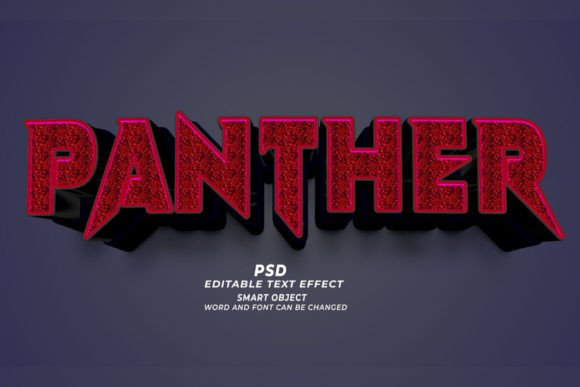
At its heart, the Panther PSD 3D Editable Text Effect is a layered Adobe Photoshop file designed to simplify the creation of three-dimensional text. The primary mechanism behind its ease of use is the implementation of Smart Objects. For those unfamiliar with this feature, Smart Objects allow you to embed source content within an image while preserving its original characteristics. In the context of this text effect, it means the underlying structure, lighting, shadows, and textures are pre-configured.
To utilize the effect, a user simply opens the provided PSD file and locates the designated Smart Object layer. By double-clicking this layer, a new window opens where the placeholder text can be replaced with custom copy. Once saved and closed, the main document automatically updates to reflect the changes, applying the 3D styling instantly. This "click and edit" functionality removes the need for manual extrusion, beveling, or complex lighting setups that typically accompany 3D typography work.
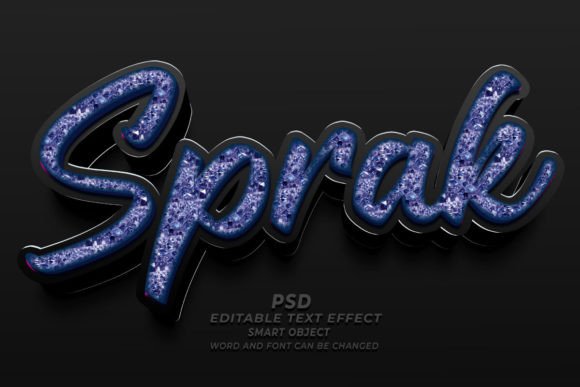
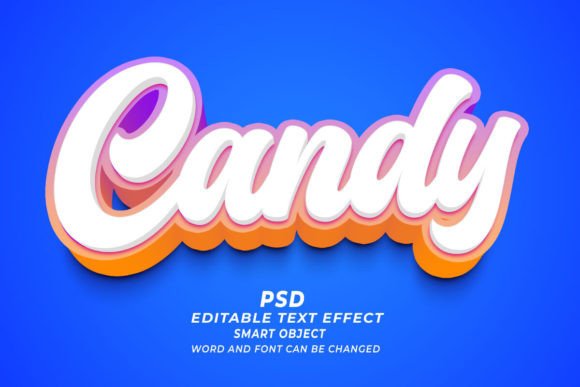
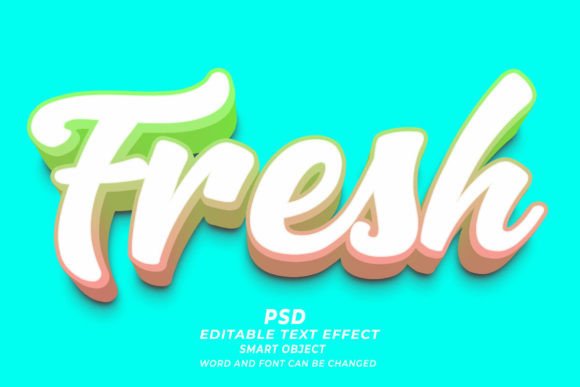
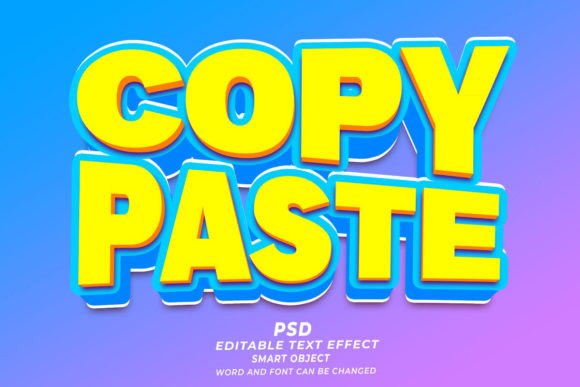
The versatility of this approach is notable. While marketed primarily for text, the underlying structure works with any kind of shape or vector path. This expands its utility beyond simple headlines to include logos, icons, and graphical elements that require depth and dimension. The files are delivered at a high resolution of 300 DPI, ensuring that the final output is crisp enough for both digital screens and physical print materials.
Comparing Pre-Made Effects vs. Custom 3D Modeling
When deciding whether to use a resource like the Panther PSD 3D Editable Text Effect, it is helpful to compare it against the alternative: building 3D text from scratch. Each approach has distinct tradeoffs regarding time, control, and learning curve.
- Time Efficiency: Creating custom 3D text in Photoshop or dedicated 3D software like Blender or Cinema 4D can take several hours, especially for beginners. The pre-made PSD reduces this to minutes. For projects with recurring needs, such as social media banners or series of book covers, this time savings accumulates significantly.
- Technical Barrier: True 3D modeling requires knowledge of lighting, camera angles, material properties, and rendering settings. The Panther PSD abstracts these complexities away, making high-quality 3D effects accessible to designers who may not have specialized 3D skills.
- Customization Limits: The tradeoff for speed is reduced flexibility. With a pre-made effect, you are bound by the existing lighting direction, color palette, and texture style defined by the creator. If a project requires a very specific, unconventional light source or a unique material interaction, a custom-built solution may be necessary.
For most commercial applications—such as marketing materials, website headers, or print-on-demand products—the level of customization offered by the Panther PSD is sufficient. It strikes a balance between professional quality and operational speed.
Practical Applications and Use Cases
The high resolution and editable nature of this text effect make it suitable for a wide array of mediums. Understanding where it performs best can help maximize its value.
Digital Marketing and Web Banners
In digital marketing, visual hierarchy is crucial. A 3D headline stands out against flat backgrounds, drawing immediate attention to key messages. The Panther PSD allows marketers to quickly generate multiple variations of a banner ad to test different copy without redesigning the entire asset. Since the fonts and sizes can be changed easily, A/B testing becomes more efficient.
Print on Demand and Merchandise
For T-shirt designs and POD products, clarity and impact are paramount. The bold, dimensional look provided by this effect translates well to fabric prints. Because the file is 300 DPI, the edges remain sharp even when scaled up for larger apparel items. Designers can experiment with different phrases and fonts to create diverse product lines without starting from zero each time.
Book Covers and Publishing
In the self-publishing space, particularly for KDP (Kindle Direct Publishing) book covers, genre-specific aesthetics are vital. Thrillers, fantasy, and business books often benefit from strong, dimensional typography. Using an editable PSD template allows authors and cover designers to iterate on title placements and font choices rapidly, ensuring the text complements the background imagery effectively.
Evaluating Quality and Flexibility
Not all PSD templates are created equal. When assessing the Panther PSD 3D Editable Text Effect, several quality indicators stand out. First, the preservation of editability is critical. Some poorly constructed templates rasterize layers prematurely, making future edits difficult or impossible. This resource maintains non-destructive editing capabilities, meaning you can return to the file months later and change the text or color without losing quality.
Second, the compatibility with various fonts is a significant advantage. Whether you prefer serif, sans-serif, or display fonts, the effect adapts to the shape of the letters. However, users should note that extremely thin or intricate script fonts may not render the 3D effect as boldly as blockier typefaces. Testing different font weights is recommended to find the optimal visual balance.
The ability to adjust colors is another key feature. While the default style may suit many projects, the layered structure allows for hue/saturation adjustments and color overlays. This means the same base effect can be repurposed for different brand identities by simply tweaking the color profiles.
When to Choose This Resource and When to Look Elsewhere
Making an informed decision involves recognizing the right fit for your specific needs. The Panther PSD 3D Editable Text Effect is an ideal choice when:
- Speed is a priority: You have a tight deadline and need a professional result quickly.
- Budget constraints exist: Hiring a 3D specialist or purchasing expensive 3D software licenses is not feasible.
- Consistency is required: You need to produce a series of assets with a uniform stylistic theme.
- You lack advanced 3D skills: You want high-quality results without a steep learning curve.
Conversely, you might need to explore other options if:
- Unique lighting is essential: Your project requires dynamic, scene-specific lighting that interacts with other 3D objects in the composition.
- Animation is needed: While the PSD provides a static 3D look, it does not inherently support motion graphics. For animated 3D text, video editing or motion design software would be more appropriate.
- Extreme customization is required: If the design demands a completely bespoke texture or geometric distortion that deviates significantly from standard 3D extrusions, a manual approach may yield better results.
Final Thoughts on Workflow Integration
Integrating tools like the Panther PSD 3D Editable Text Effect into your design workflow can significantly enhance productivity. It serves as a reliable foundation upon which you can build more complex compositions. By handling the technical heavy lifting of 3D rendering, it frees up creative energy for conceptual development and layout refinement.
Ultimately, the value of this resource lies in its balance of quality and convenience. It is not a replacement for skilled design thinking, but rather a tool that empowers designers to execute their ideas more efficiently. Whether you are creating a web banner, a T-shirt graphic, or a book cover, understanding how to leverage such editable assets can lead to better outcomes and a more sustainable creative process. As with any design tool, the best results come from experimenting with the parameters, testing different fonts, and adapting the effect to serve the specific narrative of your project.